
What’s covered: how Bitcoin and other cryptocurrency works at a high level
Prerequisites: none
Expected outcomes: A basic understanding of the three core concepts in cyptocurrency: distributed vs centralized, blockchain, and mining. You should be able to contrast these against more tranditional currencies, e.g. USD and gold.
Time to completion: 15m
The origins of trade
The oldest written artifact signed by a human was not by a king, priest, or poet. It was by an accountant named Kushim. What did he write? It was a book keeping record. In other words, a historical transaction document. Why? It’s hypothesized that this was out of necessity. The burden of memorizing who obtained what and for what was too much to bear mentally. As a bonus, by being written down it added an extra level of personal security between the parties involved.
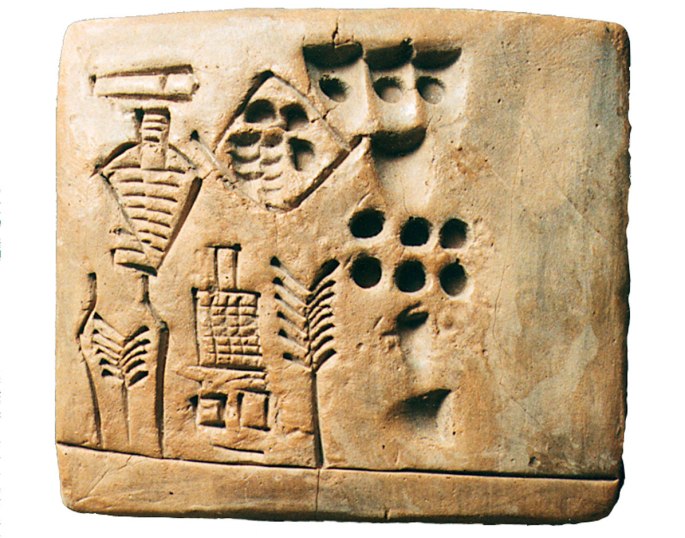
Equally challenging was conducting trade at scale without a baseline currency, i.e. “money”
The concept of money
As civilizations grew, so did the complexities of trade. Before money, every good whether it was wheat, barley, or wood, acted like their own currency. There were many problems with this. For one, determining the exchange rate at any given time was hard. A bundle of wheat may be worth 2 barrels of apples one day but the next it could be completely different depending on how many people are buying and selling each of those. Communicating and calculating this without modern technology was nearly impossible. Similarly problematic, if I want wheat and only have wood to sell, I have to find someone who specifically wants wood and has wheat to sell. Settlers of Catan anyone?
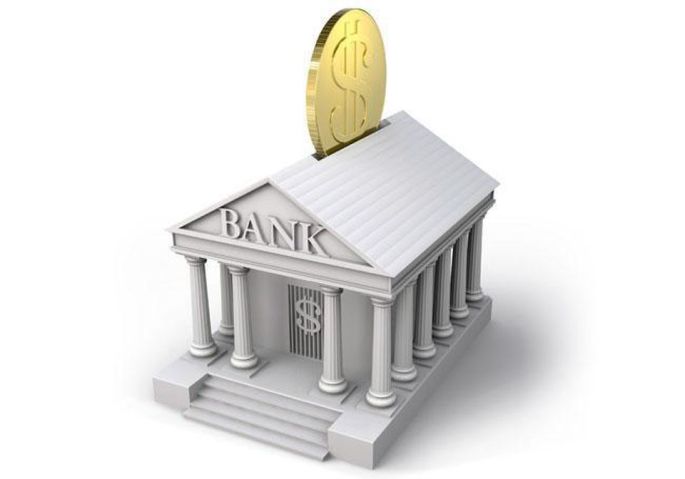
Money solved this. Money is a single currency (e.g. $USD paper bills, gold, or cowry shells) that may or may not have its own material value but the representation of its worth is agreed upon by the society that adopts it. Essentially it is imaginary but because we as humanity collectively “buy in” to this imaginary concept, it’s value is just as real as wheat or wood. In fact, with money, you technically only need one currency to contrast against of, e.g. one apple is worth 0.25c and one bundle of wheat is worth $4.50. One issue with such a system is making sure no one cheats. You don’t want someone just claiming they have more money than they do (counterfeiting). The solution to this at the time was to have a trusted authority governing everyone’s balance and transaction history. We call these authorities banks and governments
Centralized vs Decentralized
Banks and governments, in return for managing and validating your balance, will then charge you for this service. In other words, they will take some of your money for managing your money. This centralized power model does not mean they are inherently evil but it does give them, the ability to charge fees that serve their own growth and profit. Worse, since they control what money is available and who has what, they can print money whenever they get into trouble and avoid legal penalty for doing so, e.g. the 2008 financial crisis.
More than anything, this is what cryptocurrency solves. It provides a new solution for upholding the integrity of money and ownership. No longer do we need a third party (centralized) authority to validate our balance and transactions. The important thing here is it’s an evolution of what we already had, only existing now because of modern technology. Much like how the Internet evolved communication rather than creating it. Also like the internet, while the implementation is technical, the concepts are surprisingly easier to to understand than one might think. It all starts with what is known as the blockchain.
Blockchain
So how can we get away without banks? How can we remove some trusted power that validates your transactions on everyone’s behalf? And how can this be done without everyone constantly sanity checking everyone’s balance sheets by hand? Saying that this is solved by “technology” is not very revealing and frankly, should be concerning if that’s as deep as the average person can comprehend. Implementation details aside, the way cryptocurrency handles this is by giving everyone a copy of every transaction ever made, yours and everyone else’s. So instead of having, say, a single bank hold a ledger of everyone’s transaction history for all of their own clients, everyone gets a copy of everyone’s activity. This is what the blockchain is. It is a history (chain) that holds every single transaction (block) ever made in sequential order. In other words it is a master ledger containing every transaction ever made for the given cryptocurrency, e.g. Bitcoin. From here on out, I’ll use the words ledger and blockchain interchangeably for initial learning sake.
Let’s give a concrete example of a transaction being made and added to the blockchain: Susan has $100 worth of Bitcoin. Bob has $50 worth. I’m using US Dollars as a reference for some tangible familiarity but really it’s no different if I use Bitcoins as the measured value. Susan buys a Smoothie from Bob’s Juice Truck and pays Bob $10 worth of Bitcoin. Susan conducts this transfer in a similar manner to how she would with a debit bank card. She specifies the recipient address associated with Bob’s company (much like a bank account number) how much she is going to pay, and then transfers that amount out from from her own address (account number). The transaction is validated by her “signing” with her proof of identity, much like using a pin or signing the receipt. These details are all bundled into the transaction, including the proof of transaction and it is appended on top of the latest block in the transaction history chain. From there, everyone then gets updated that this happened between these two account numbers. Now Susan has $90 left in her “account” and Bob has $60[1].
If you are following along this example, then you may have a few questions:
1. I trust in my bank to know all balance and transaction information for all of their clients, including my own. Isn’t it a major concern that everyone will know everyone’s balance and transaction history?
Your ID is a long string of characters that is auto generated and is unrelated to your identity. It’s public as it’s embedded in the blockchain but is not identifiable. In fact you could have many IDs just like you could have many emails. Unlike emails, no personal information is required. However, in addition to your public ID (address), you are also given a private ID (a secret key). This is what you use to “sign” transactions that was mentioned above. If you give someone your private ID associated with your public ID, then they can “own” it and do whatever they want with it. More on how public and private IDs (keys) play a role in transactions in Part 2. More on basic security practices in Part 4 and Part 7.
2. Since everyone has a copy of the ledger, what would happen if Bob somehow managed to fake some transaction that he was paid $1000 worth of Bitcoin without by a fake sender’s address and send out this block onto everyone’s blockchain.
Well, this is the power of distribution. As his ledger is scrutinized and copied around, it will get refused as it won’t “add up” against other people’s ledgers. He won’t be able to show that someone else had at least $1000 worth and allowed (signed) the transaction as no one else “real” had a $1000 worth and showed the transaction from their side, with that amount deducted. The transaction will instantly be rejected as fake without all of that valid, legit requirements. The technical details of using this information for validation method doesn’t matter for the purpose of this section. We will dive in more on how transactions are conducted in Part 2
3. Where do coins originate from? Your example assumes people already have a balance. Are there finite coins out there? Do new ones get added?
For the sake of keeping things simple, most cryptocurrencies, e.g. Bitcoin, have a finite amount of coins. To manage a consistent, predictable rate of inflation, all the coins are not immediately available. This takes us to our next section and final piece to understanding the high level concepts of cryptocurrency: mining
Gold vs Cryptocurrency
Cryptocurrency, at least in the context of where coins come from, has a lot more in common with gold than it does to say USD. For this section I’ll refer to the two most prominent cryptocurrencies and how mining for them works: Bitcoin and Ethereum. For learning sake, that’s all we need to care about. Like gold, there are a finite amount of coins available. Some of it has been mined and is currently used in trade and transactions. Others have yet to be “discovered” or mined. How is it mined? For gold, this is well understood. It resides in deposits beneath the Earth’s crust. Initially, we only had primitive tools but that was okay because there was a lot of gold. Anyone with a pan could find gold in well known sandy streams and rivers. Now there is less gold but our tools have gotten better. We now have high powered machinery to blast open rock and extract the gold from within it. So we continue to have a somewhat deterministic yield of return thanks to rarity and technology working in parallel.

Cryptocurrency behaves the same but rather than pans and heavy machinery, our tools range from personal computers to massive server farms. And rather than rare metal elements, you mine digital pieces of data that have an associated worth against it, e.g. $20. How does a computer mine this data? Well, imagine you have a complicated math problem to solve. You are given a formula and some inputs, and you are asked to determine what are the outputs after you “crunch the numbers against the formula”. e.g. solve for x in 2 + x = 6. Cryptocurrency mining is like that but more complicated. Your computer runs a program for mining and is tasked with computing hard math problems. The work it does yields new coins. As new coins are discovered, the problems your computer must compute get more challenging. Just like the more gold you mine, the harder you must work to find new gold. Luckily computers also become more powerful, more efficient, and cheaper with time. Hence the similarity between gold and cryptocurrency.
The purpose of mining
That’s all well and good but you may be wondering, what exactly are the kind of math problems computers are computing? Is it merely random formulas to aid in the control and inflation rate of new bitcoins being added to the market? This leads me to my favorite part of how cryptocurrency works. Computers are not just mindlessly working hard, burning energy for the sake of it. It’s actually providing a useful service. In fact, it’s vital to how it all works. In the blockchain section above, I use a simple transaction history involving Bob and Susan. But what happens when you have thousands of people making millions of transactions between each other? All of these transactions are happening practically independent of each other at nearly the same time. Remember, each cryptocurrency, e.g. Bitcoin and Ethereum have one single blockchain that comprises of every transaction ever made. Sorting and validating each transaction and bundling it into a sequential historical document gets complicated really fast. And unlike a centralized model like a bank where you only have one ledger, you want to leverage multiple sources all coming up with the same result, e.g. a web of trust. Without knowing the actual math involved in sorting and validating, you can imagine it quickly becomes too much for your head and then again it becomes too much for your old, slow tablet, and eventually even too much for your shiny new desktop computer. The more transactions that are made, the harder the computing becomes and the more resources we need. This is the purity of it all as, by design, it is better than the sum of its parts.
Same problem, new solution
One thing I would really like to reiterate here is that Bitcoin and other cryptocurrencies are not any less real than USD or gold. The value of all three is “imaginary” only made real by the collective buy-in from enough people, AKA adoption. What separates cryptocurrency from other currencies we use today is the adoption rate. Will cryptocurrency surpass the next few thresholds needed for indisputable legitimacy? What will it take? Which cryptocurrencies will win? More on this in Part 3. But before we go there, we have to wrap up a few more concepts. Namely, what the heck is a wallet, what are exchanges used for, and how do transactions actually work behind the scenes. All of this is described in Part 2
If you are looking for advice on which cryptocurrency you should invest in, this site doesn’t provide any opinion on any particular option. Sure, I am a cryptocurrency optimist. I see a lot of value in not just day to day money handling, but also disruption potential in all forms of trade, supply chain, identification, and even voting. However, the goal of this site is to teach you what exists presently rather than to speculate on the future.
[1] balances are never really stored. Since you have the entire history of every transaction ever made, your balance instead is determined by summing up all transactions you made in both receiving and sending.
 Blocktrain